Local Vendor Gift Shopping: A Checklist for Unique Market Finds
A practical checklist for buying gifts from local market vendors — how to choose for a specific person,...

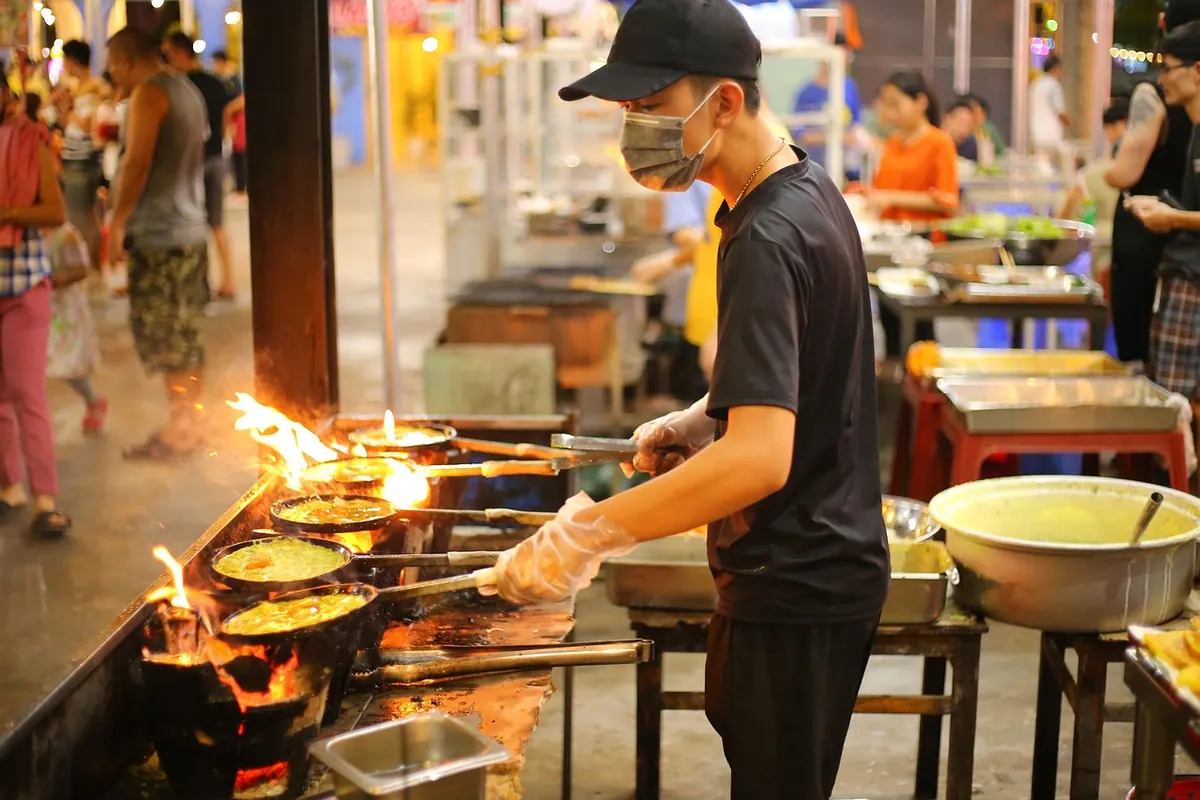
The porchetta van has six people in line, one server, and a queue that stalls every time somebody reaches the front and starts thinking. You have seen it: the pocket-patting, the sudden interest in what the green sauce is, the phone call to a friend who has not decided yet. None of it is rude, exactly. It is just slow. Food stalls run on a rhythm, and the people who respect that rhythm get served faster, eat better, and get a warmer welcome next Saturday. Here is how to be one of them.
Before you commit to the queue, spend ten seconds reading it. Where does it start, and does it end where you think it does? Some stalls work on two points: you order and pay at one end, then collect at the other. Joining the wrong end is the quietest way to annoy everyone, including the vendor, who now has to explain it for the ninth time that morning.
Then read the board. Is there one? What has been crossed out? If the sign says cash only, or card only above a certain amount, that is worth knowing before you are standing at the counter with your hands full. Watch the front of the queue for a moment and notice the order of things: money first, then food, or the reverse.
And decide now, not when you get there. If you are collecting for other people, get their orders into your phone before you join. "I'll have whatever he's having" only works if he is still beside you.
Leave a little space. Standing so close that you are reading over the shoulder of the person paying does not speed anything up, and it makes the whole line feel tighter than it is. A step back is polite, and it also gives the vendor room to pass a paper cone of fried fish over the counter without apologising.
Holding a place for a partner who is still at the cheese stall is fine. Holding a place for five friends who arrive at the front is not, especially if the stall is small and the queue is long. If your group is large, order in twos rather than as a table of nine.
Keep your bags out of the walking lane, and step aside to take a call. And if you want to chat with the vendor, read the moment: a quiet mid-morning is the time for conversation, a Saturday lunch rush is not. Most stallholders are happy to talk about what they make. Just not with eleven people waiting.
A good order is short, loud enough, and given in a sequence: how many, what, and then the changes. "Two of the small ones, one with chilli, and a bottle of water" is easy to work with. A stream of detail delivered sideways, halfway through the assembly, is not.
Say what you want rather than what you don't, where you can. "No onions" is clear enough, but "with everything except the onions and the pickles, and the sauce on the side" takes longer to unpack. If you are genuinely unsure, ask — "What would you have?" is a good question and usually gets an honest answer — but ask it before you order, and accept the recommendation without a debate.
Point with your eyes or your voice, not a finger pressed to the glass. If the stall is one of those where the food is already laid out, name the piece you want and let the vendor pick it up. And if you have children old enough to speak clearly, let them order. Vendors tend to enjoy it, and the child learns something useful.
The payment is where lines die. Have the money or the card ready before the total is announced, so the transaction takes seconds rather than a small committee meeting.
With cash, small notes and coins are the courtesy. Handing over a large note early in the day for a small purchase means the vendor has to go hunting for change while everyone waits. If that is all you have, say so before they start: "I've only got a fifty, is that all right?" They can tell you yes or no in two seconds, and you can both plan around it.
Where the vendor's hands are busy with food, put the money into their hand rather than on the counter, and take your change the same way. If you need to sort coins or pocket a receipt, step to the side first. Tipping is not expected at a market stall; rounding up, or telling them to keep the change, is a nice gesture and never an obligation. On cards, tap and go, and wait until the machine confirms before you turn away.
The moment your food is in your hands, you have a job: get out of the way. Two or three steps is usually enough. Find the shelf, the ledge, the standing table, or the patch of pavement the stall has quietly designated for eating, and settle there rather than at the counter.
Use the bin the stall provides, not the neighbouring trader's crate and not the window ledge of the shop behind you. Greaseproof paper, napkins, and empty bottles have a habit of migrating; keep yours together and dispose of them in one go. If you took a crate or a returnable bottle, give it back where the stall asks for it.
If you spill something, say so. Vendors would much rather hear "I'm sorry, I've knocked my drink over" and hand you a cloth than discover a sticky patch ten minutes later. And if you want to sit down, buy something from whoever owns the seats — a coffee, a drink, a slice of cake. That is the whole arrangement.
Small stalls are not restaurants with a second kitchen behind them. They work in a tight space with shared tools, which is why questions about ingredients should come early and be specific. Say plainly whether you are asking about a preference or an allergy. "I can't eat nuts" and "I'd rather not have nuts" get different answers, and the vendor needs the true one.
If the answer is no, take it. A vendor who says they cannot guarantee something is being honest, not unhelpful. If you have a serious allergy, treat a market stall as what it is — a small, busy, open kitchen — and take proper advice before ordering. That is a conversation for you and your doctor, not for the queue.
Do not haggle over the price of a sandwich. Prices at food stalls are set, and asking for a discount in front of a waiting line puts everyone in an awkward spot. If something is wrong with your order, say it quietly and immediately, while it can still be fixed; a calm word at the counter beats a complaint delivered to the whole queue.
Six people, one server, one rhythm. When your turn comes, you should already know what you are ordering, how you are paying, and where you are going to stand while you eat it. Say your order clearly, hand over the money, take your food, thank them, and move two steps to the left. The person behind you gets their turn, the vendor keeps their pace, and the whole line — including you, next time — moves a little faster.
Photo: WilliamCho / Pixabay
A practical checklist for buying gifts from local market vendors — how to choose for a specific person,...
Evening markets do more than sell food after work — they turn a square into a meeting place and give small...
A practical guide to evening market events with children: when to arrive, what to pack, how to handle...