Local Vendor Gift Shopping: A Checklist for Unique Market Finds
A practical checklist for buying gifts from local market vendors — how to choose for a specific person,...

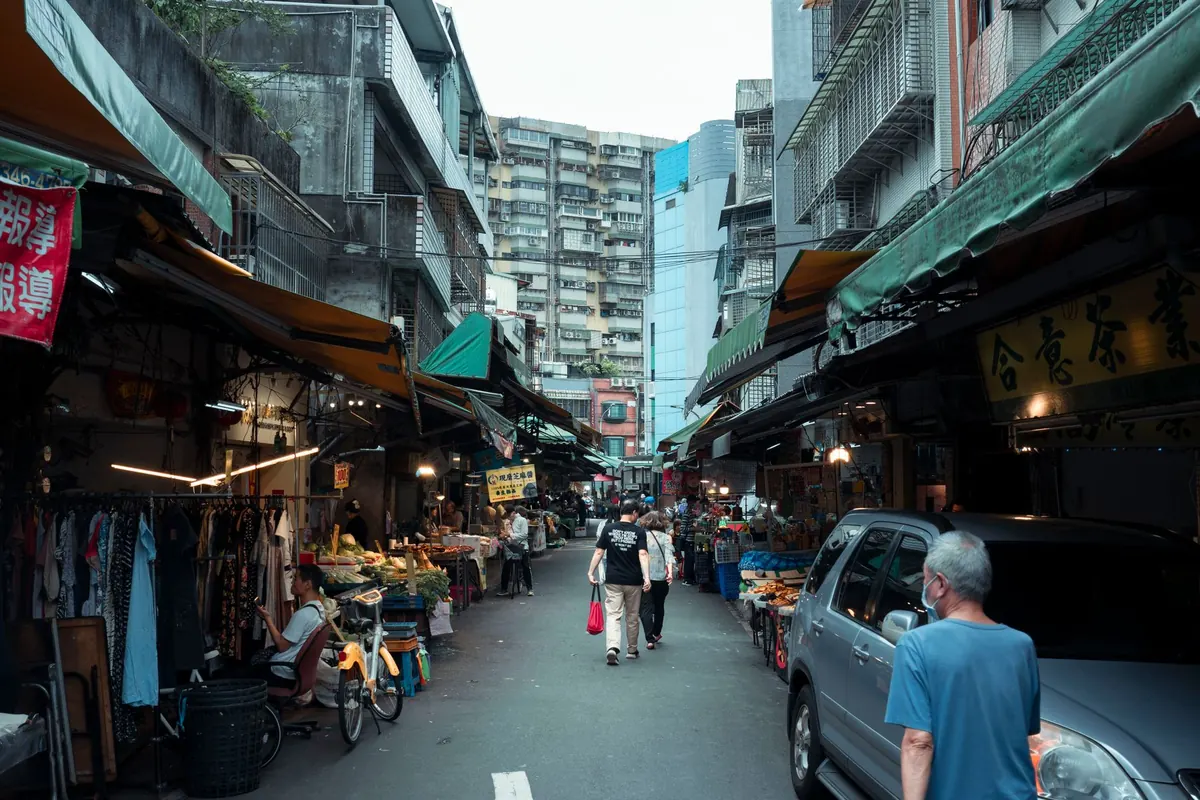
At ten in the morning the piazza is a corridor. People walk through it, nobody stops. At half past six on a Thursday it becomes something else: a cheesemonger sets up under a string of bulbs, a baker stacks focaccia on a folding table, two children claim the strip of pavement between them, and a man on his way home from work buys tomatoes, bread and a jar of honey without once taking off his backpack.
That shift — same square, different hour, different life — is worth taking seriously. An evening market is not simply a morning market with the sun gone down. It serves a different crowd, sells a different basket, and does a distinct job for a neighborhood: part shop, part front garden, part small business incubator. Understanding that job is the first step toward making one work where you live.
Morning markets run on routine. They serve the retired couple doing a weekly shop, the parent with a stroller, the restaurant cook buying flats of produce, the person who plans meals three days ahead. Those customers still exist at eight in the evening, but they are not the ones walking past your stall.
The evening crowd is made of people whose daylight belongs to someone else: commuters, shop and hospital staff finishing a shift, students, parents collecting children from after-school care. They are not stocking up. They are assembling dinner and salvaging the evening, often on foot, often with a bag already on one shoulder.
That changes what sells. Baskets get smaller. Hot and ready-to-eat food moves faster than raw ingredients. Single portions beat family packs. Flowers and bread go home with people who had no intention of cooking anything ambitious. Vendors who work both shifts will tell you the same thing: the evening crowd buys tonight, not the week. A market that ignores this — piles of bulk produce, nothing cooked, no lighting, no place to stand — will look busy for twenty minutes and empty by seven.
The social value of an evening market is easy to describe and hard to fake. It comes from repetition and low stakes. You see the same stallholder every Thursday. You learn that the woman with the dog buys the same cheese. You start nodding at people whose names you don't know yet. None of this is dramatic, and all of it is the raw material of neighborhood trust.
Sociologists have a term for places that are neither home nor work — a third place — but you don't need the vocabulary to recognize one. It is somewhere you can turn up alone and not be odd. An evening market is unusually good at this. An older resident who would otherwise be indoors by six gets an hour of company. Someone who moved to the area three weeks ago gets a low-pressure way to practice being local. Kids get a small patch of supervised independence, which is rarer than it should be.
All of that depends on people being able to stay. A few benches, a couple of standing tables, a patch of light that isn't harsh, one thing for children to do. If every visitor buys and leaves within four minutes, you have a shop that happens to be outdoors. If people linger, you have a neighborhood.
A market at eight in the evening is not a shop that stayed open late. It is a different civic object.
For a small producer, an evening market is often the most affordable route to a second sales window. There is no shop rent and no need to staff a full day. A baker can sell the afternoon's second bake. A vegetable grower can move produce that would otherwise be compost by Friday. A cook with a single signature dish can test it in front of several hundred people in three hours.
A three-hour market is reachable for someone with a day job, a single van, or one pair of hands. It also provides feedback you cannot get from a wholesaler: you find out immediately whether people want the larger loaf, the spicier sauce, the smaller jar.
Evening trading has costs. Staff hours run later, transport happens in the dark, lighting and power have to come from somewhere. Stall fees should be modest and transparent for a short market — a four-hour evening pitch should not cost the same as a full market day — and the practical details should be settled before the first night: vehicle access, power supply, shelter, who cleans the pitch, what happens if it rains.
The economic argument for evening markets is usually framed as footfall, and that is broadly right, but it is conditional. People walking to a market walk past shop windows. They arrive earlier and stay later than a plain errand would take. Bars and restaurants near a good evening market often pick up an after-market crowd, and a bakery can find a second sell-out moment at seven instead of noon.
The condition is mix. If the market duplicates what already exists on the street — the same hot food at lower overhead as the takeaway two doors down — it takes trade rather than creating it. Organizers who care about the whole street curate for gaps: fresh produce where there is no greengrocer, prepared food that complements rather than copies, and cross-promotion with the shops behind the stalls. It is not automatic, and pretending otherwise sours relationships fast.
Most evening markets fail on logistics, not on appetite. These are the details worth getting right before the first night and checking again a month in:
Markets are shaped by the people who use them, and small habits make the difference between a nice event and a genuine neighborhood institution.
The test of a good evening market is not how crowded it looks at seven. It is whether, at nine, a few people are still talking, the vendors are packing up without resentment, and somebody is already asking when it comes back.
Photo: Jimmy Liao / Pexels
A practical checklist for buying gifts from local market vendors — how to choose for a specific person,...
A practical guide to evening market events with children: when to arrive, what to pack, how to handle...
A practical guide to turning cheap market stall finds — day-old bread, sauce vegetables, beans, cheese...